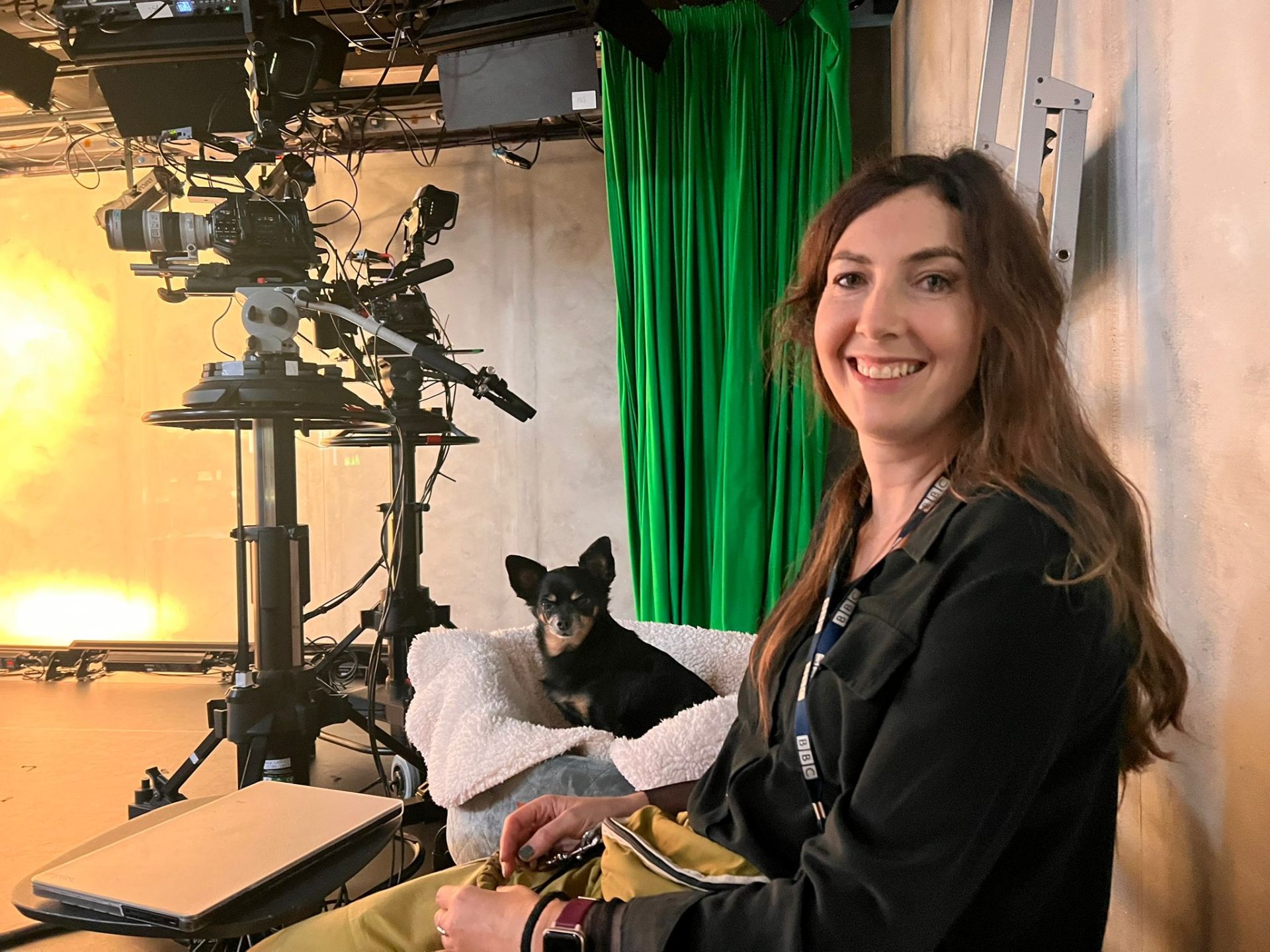
Almudena Garcia-Parrado
My story
I grew up in a working-class suburb of Madrid. When I was ten my father had a stroke and I became his carer. We were broke, stuck, and the world felt very far away.
Then we discovered BBC documentaries.
Every day the two of us watched them together. They were our escape. He told me: one day you will travel the world and make these films you love so much.
I wrote a letter to the BBC. And remarkably they said yes.
So with £200, a rucksack, a sleeping bag and my dream, I got on a plane.
All these years later, I've had the privilege of making films watched by millions around the world.
But I'm still that girl from Madrid.
I know what it means to follow a dream that feels impossibly far away.
That's why I connect with anyone who has a passion they want to share. As someone who has lived inside that feeling and found a way to bring it to life.
What I want for you is simple.
I want to give you the superpower I was given - the ability to look at what you love and find the story inside it. To see the world differently.
To grow into someone who doesn't just experience their passion but can make other people feel it too.
That's storytelling. That's filmmaking. And it changed my life.
And my biggest passion of all? It's not making films. It's Quijote - my soul dog, my co-director, my reason for everything. He's been beside me through every part of making this course - and I wanted it to feel full of joy and love.
That's the kind of course this is. And that's the kind of person I am.
I'll be watching every film. I'll be writing back to every one of you. And I can't wait to find out what we build together.